How an accounting firm runs on Rafter
A worked example, built out in a demo firm we call Fjord & Ledger: the month-end close as a skill, the VAT rule everyone must remember as a memory, and a status-report agent that never sends without partner review.
Fjord & Ledger is a demonstration workspace, not a customer. The screenshots are the real product; the firm is illustrative.
The firm's real knowledge isn't in the accounting system
It's in the habits. Why you file VAT on the 10th and not the legal deadline. How revenue is recognized for the SaaS clients since the March conversation with the auditor. Which client needs the bad news in the first paragraph, not the last.
New staff learn all of it by asking. Everyone else re-learns it by mistake — usually in the first week of the month, at the worst possible time.
Close the month the same way, whoever runs it
In the demo, the close is a skill — a checklist with the firm's own gotchas — and every rule it depends on is a memory it links to: the VAT deadline rule, the revenue-recognition decision, the client-communication house style. Whoever runs the close, their AI follows the same steps and cites the same rules.
Client onboarding is another skill. The weekly status digest is an agent that drafts per-client updates in the house style — and its own instructions say it never sends without partner approval. The control isn't a policy document; it's in the agent.
When the auditor changes a treatment, you edit one memory. Every skill citing it, and every teammate's next question, inherit the change.
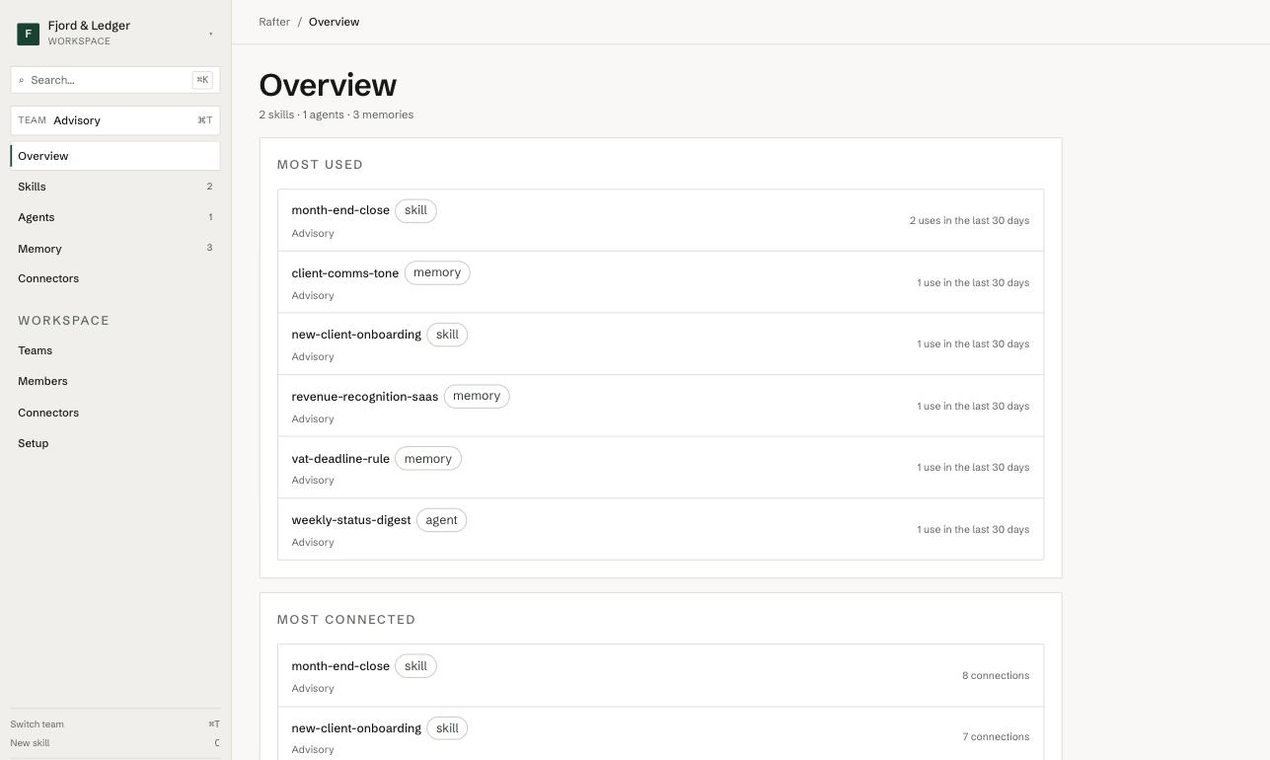
One person updates the rule. The whole firm's AI knows by the next question.
What you’d actually type
- “Run the month-end close for [client] — follow our skill.”Steps and gotchas from the firm's own checklist, not a generic one.
- “What's our VAT filing rule, and why?”The date and the near-miss that set it, together.
- “Draft the weekly status for [client] in our house style.”Numbers first, bad news up top — and nothing sends without a partner.
Two minutes to connect the tool you already use.From $9.99 per user — see pricing.
Connect your tools